Phone:
1 (437) 707-7230
Service Areas:
Serving Burlington, Oakville, Milton & the GTA
Drywall is durable, but over time, it can become damaged due to moisture, movement in the structure, or everyday wear and tear. Knowing when to repair or replace it can help you avoid bigger problems and keep your home looking clean and well-maintained.
Here are the most common signs your drywall may need attention.
Small hairline cracks are common, but larger or spreading cracks can indicate movement in the structure or poor initial installation. If cracks keep coming back after repairs, it may be a sign the drywall needs replacement in that area.
Brown stains, bubbling paint, or soft spots usually point to water damage. This often comes from leaks in plumbing, roofing, or windows. Water-damaged drywall typically needs to be cut out and replaced to prevent mould and further issues.
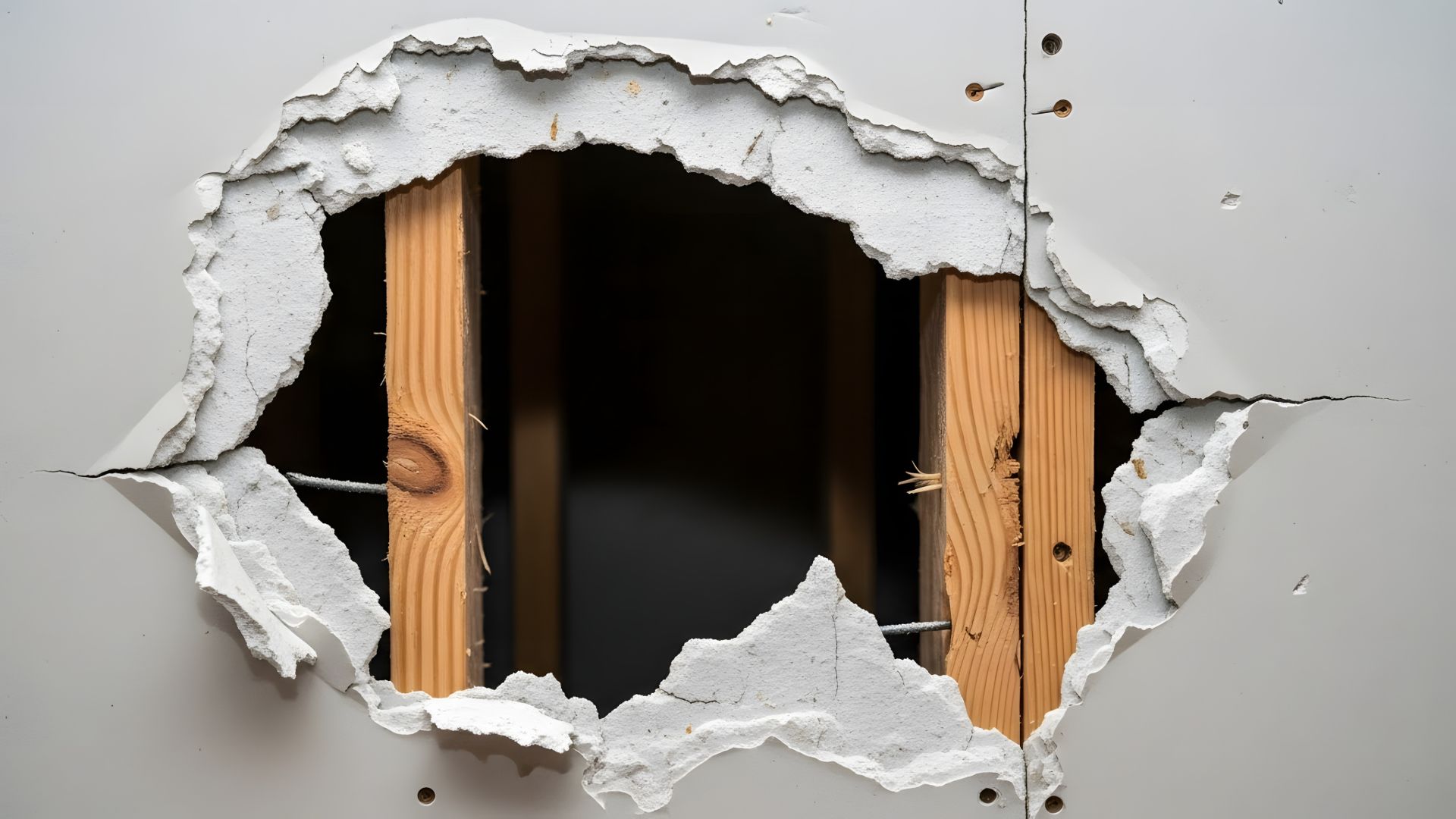
Small holes from nails or accidental impact are usually easy to repair. However, larger holes or repeated damage in the same area may require patching or replacing a full section of drywall for a smooth finish.
If drywall is sagging, bulging, or feels soft when pressed, it’s often a sign of moisture damage or weakened material behind the wall. This usually requires replacement rather than simple repair.
If you can see tape lines, uneven joints, or bumps on the wall, the original finishing work may not have been done properly. In some cases, resurfacing or re-finishing can fix this, but severe cases may require redoing the drywall.
Mould growth or persistent damp smells often indicate hidden moisture inside the drywall. This is a serious issue and the affected sections should be removed and replaced as soon as possible.
Nail or screw heads pushing through the surface (known as “nail pops”) are common in homes that have settled. While minor cases can be repaired, frequent nail pops may signal underlying movement in framing or poor installation.
When in doubt, a professional inspection can help determine the best solution.
Drywall problems can start small but grow quickly if ignored. Catching issues early helps protect your home’s structure and keeps your walls looking clean and smooth.
If you notice any of these signs, it’s best to have a drywall professional assess the damage and recommend the right fix before it gets worse.